

When a manufacturer decides to ramp up production, they have to hire quickly. Some businesses are using skills assessments and hands-on hiring tests to expand the available talent pool by evaluating candidates on what they can do—not just what appears on a resume. These assessments can look like mechanical aptitude tests, instruction-following exercises, and short job simulations that mirror real production work.
Across manufacturing and adjacent industrial settings, one of the most common hands-on hiring exercises is a simple assembly simulation. In one example from an online discussion board, candidates for a manufacturing job are given a box of disassembled components—such as flashlights—along with pictorial instructions. They are asked to assemble the product while being observed. Candidates are typically evaluated on their ability to follow instructions, mechanical aptitude, handling and care of parts, and/or attention to detail. Evaluators focus on whether candidates follow instructions correctly, handle materials appropriately, and demonstrate basic comfort with mechanical tasks. In some cases, interviewers deliberately observe how candidates respond when they encounter confusion or mistakes, offering guidance to see whether they can learn and adjust in real time.
Structured assessments can be used to verify job-relevant ability by demonstrating a job seeker’s skills. Here are some manufacturing-related skills that can be assessed:
- Manual precision
- Safety awareness
- Technical reasoning
- Mechanical aptitude
- Spatial reasoning
- Ability to follow written or pictorial instructions
- Communication skills relating to processes
- Basic computer or machine interface skills
- Measurement
By focusing on demonstrated ability, employers can consider additional candidates who might otherwise be screened out early in the hiring process. As one hiring practitioner described in a public discussion of manufacturing screening methods, “the goal is to evaluate whether an applicant can learn the task, not whether they already know it.” At the same time, assessments help reduce mismatches between candidates and roles.
For manufacturers, skills assessments offer several practical advantages, such as:
- Reducing reliance on resumes that may not reflect actual capability
- Allowing employers to evaluate candidates in job-relevant conditions
- Helping identify high-potential workers who may lack traditional experience
- Improving confidence in hiring decisions for safety- and precision-critical roles
Importantly, these approaches can increase access to manufacturing careers by allowing candidates to demonstrate capability directly, rather than being filtered out by credential requirements.
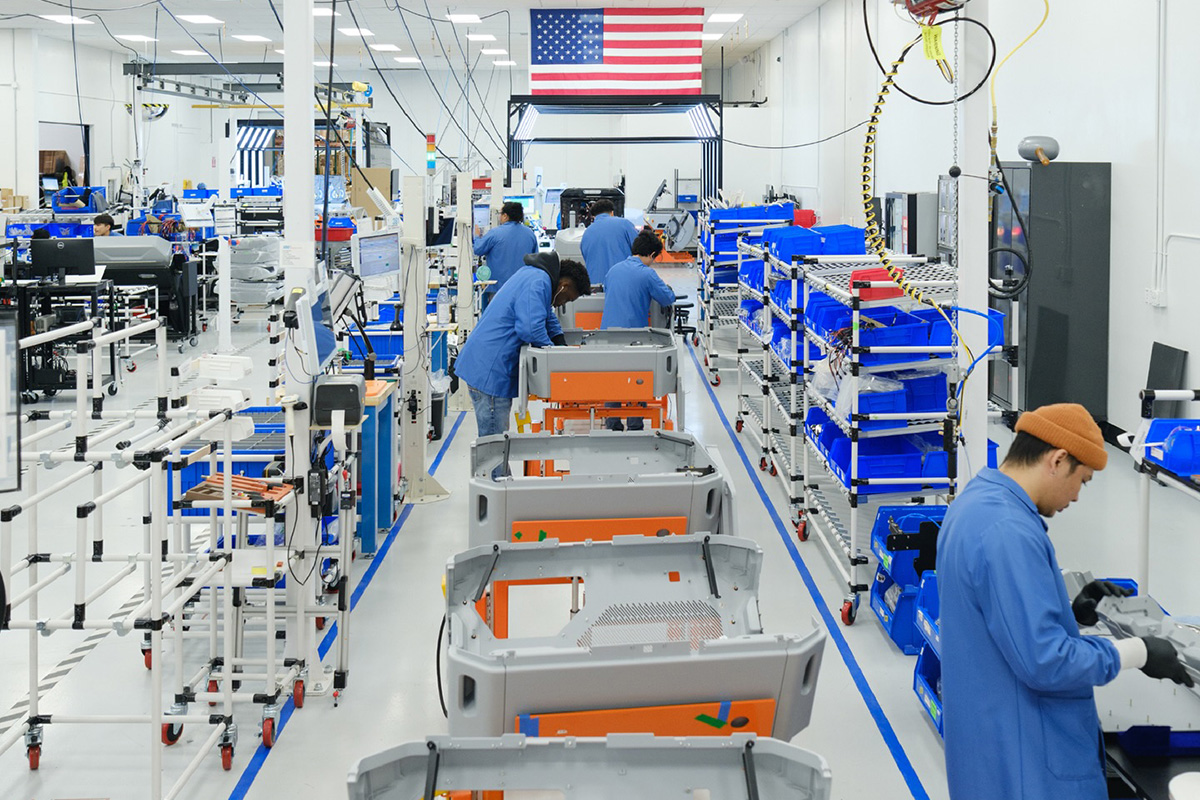
This experience aligns with what some manufacturers report in practice. According to Tony Sgori, Factory Director at Skydio in Hayward, the autonomous drone maker adopted skills assessments during a hiring ramp-up after finding that resume screening alone was not producing strong results. “We were spending too much time reviewing the resumes, and it was hard to tell what was misrepresented,” he explained. Skydio designed its assessments to evaluate communication alongside technical ability, intentionally introducing ambiguity into some exercises to see whether candidates ask clarifying questions. “We want people who will speak up when something isn’t clear,” Sgori said. The approach has also helped the company identify strong candidates from outside traditional manufacturing backgrounds. Sgori noted that a recent successful hire previously worked at Cold Stone Creamery and had no manufacturing experience, but performed strongly during the assessment process and was later promoted. At Skydio, Production Leads now facilitate some assessments, rather than hiring, bringing the hiring process closer to the production floor while creating development opportunities for newer supervisors.
Manufacturers don’t need to overhaul their entire hiring process to begin using skills assessments effectively. They can start small by piloting a skills assessment for one high-volume entry-level role and observing how candidates perform basic instruction-following or assembly tasks related to the role.
As manufacturing roles continue to evolve with automation, digital tools, and more complex production systems, the ability to assess practical skills will likely become even more important. If you’re interested in learning more about how you could incorporate this into your hiring process, reach out to cmichaels@ehsd.cccounty.us, Regional Manufacturing Careers Specialist at EASTBAYWorks.