

Additive manufacturing has transformed production, design, and supply management across many industries. But for high-resolution parts and other precision applications, the slow speed of many processes remains a barrier to widespread adoption.
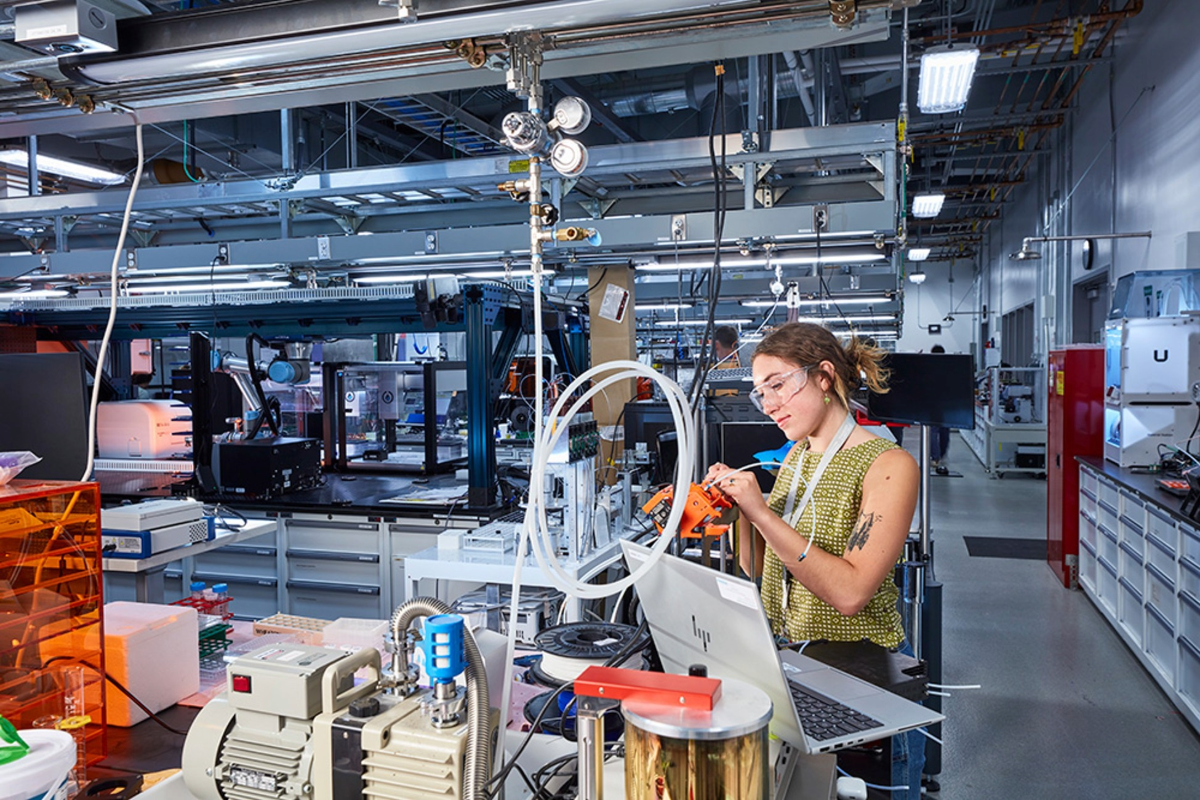
Engineers at Lawrence Livermore National Laboratory (LLNL) are working to change that through advances in methods and materials at the Advanced Manufacturing Lab, part of the Livermore Valley Open Campus, an innovation hub located adjacent to LLNL’s main security perimeter.
One example is Tomographic Volumetric Additive Manufacturing (tVAM), developed by LLNL and the University of California (UC) Berkeley. The process patterns light onto a photosensitive material, curing into a smooth finished product in seconds and in a single step, rather than building it layer by layer over hours or even days.
To make tVAM faster and easier to operate, the engineers tackled the need to manually exchange the system’s print volume after every build, which increases production time and complexity. Earlier this year, LLNL introduced FlowVAM, a technology that uses material flow to rapidly exchange printing medium and increase part production rates up to 200 times. FlowVAM won a 2026 R&D 100 award.
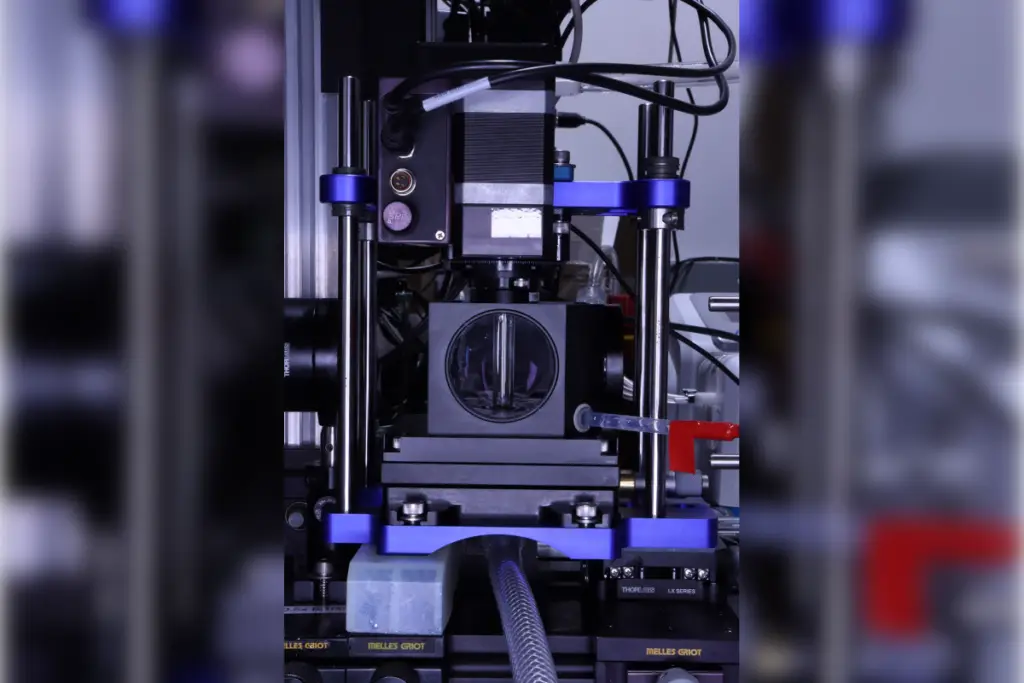
By elevating tVAM to scale, FlowVAM enables high-rate, repeatable 3D printing, enabling continuous production of high-value acrylic, plastics, glass, silicone, and soft hydrogel parts. A single system can easily achieve production-relevant fabrication rates of over 5,000 prints per day. FlowVAM can also operate with in situ metrology for immediate process control feedback.
The development team is exploring ways to expand the range of available material viscosities. In the longer term, they will investigate approaches to increasing the build volume.
Companies interested in licensing FlowVAM or other advanced manufacturing technologies should contact LLNL’s Innovation and Partnerships Office (IPO) at ipo.llnl.gov/portfolios/advanced-manufacturing.
###